




Multi-axis Robotic Arm Controller TP-X1-B-N-A1
2. Smooth MISS point trajectory: Optimizes the machine's motion trajectory at MISS points for smoother operation, reducing impact on the machine, extending its lifespan, and improving operational efficiency.
3. Torque detection and protection: Real-time torque protection function to safeguard the robotic arm and machine; torque detection during product pick-and-place to protect the machine's gripper from being squeezed; collision protection during processing to prevent damage.
4. Compatible with standard CNC MACRO calculations, and supports instruction redefinition and decimal point redefinition, making non-standard motion customization development more convenient.

Specification
|
Product Series |
TP-X1-B-N-A1 |
TP-X1-B-N-A2 |
|
► System Specifications |
||
|
Display Size |
7-inch |
7-inch |
|
Maximum Number of Axes (Including Spindles) |
Standard 3 (max 9) |
Standard 6 (max 18) |
|
Maximum Number of Channels |
Standard 1 (max 1) |
Standard 2 (max 2) |
|
Maximum Number of Interpolated Axes per Channel |
9 |
9 |
|
Maximum Number of Spindles per Channel |
6 |
6 |
|
DA/AD |
External expansion module board (expandable to 32 groups) 14 BIT |
External expansion module board (expandable to 32 groups) 14 BIT |
|
Operating System |
RT Linux |
RT Linux |
|
Memory |
2GB |
2GB |
|
Program Capacity |
8GB |
8GB |
|
Block Pre-Reading Rate |
8000 b/s |
8000 b/s |
|
Maximum Tool Compensation Groups |
160 groups |
160 groups |
|
Communication |
USB/RS485/LAN/WIFI |
USB/RS485/LAN/WIFI |
|
Bus Function |
EtherCAT |
EtherCAT |
|
Maximum Expandable I/O |
256/256 (1ms 64 IN/OUT, 4ms 192 IN/OUT) |
256/256 (1ms 64 IN/OUT, 4ms 192 IN/OUT) |
|
Industrial IoT (IoT) |
Optional |
Optional |
|
Absolute Encoder Function |
SSI (6 groups, expandable up to 12 groups) |
SSI (6 groups, expandable up to 12 groups) |
|
► Compensation Functions |
||
|
Taper Compensation |
Supported |
Supported |
|
Backlash Compensation |
Supported |
Supported |
|
Arc Sharp Angle Compensation |
Supported |
Supported |
|
Bidirectional Leadscrew Error Compensation |
Supported |
Supported |
|
Feedforward Compensation |
Supported |
Supported |
|
► High-Speed and High-Precision |
||
|
NURBS Fitting |
Supported |
Supported |
|
Full Closed-Loop Control Function |
Supported |
Supported |
|
► Auxiliary Functions |
||
|
Custom Boot Screen |
Supported |
Supported |
|
Hybrid Use of Bus Axes and General-Purpose Axes |
Supported |
Supported |
|
IO Redefinition Function |
Supported |
Supported |
|
Inclined Axis Machining |
Supported |
Supported |
|
Inclined Plane Machining |
Supported |
Supported |
|
DNC Machining |
Supported |
Supported |
|
Proportional Scaling |
Supported |
Supported |
|
Acceleration/Deceleration Types |
Linear type (constant A), S type (constant JERK) |
Linear type (constant A), S type (constant JERK) |
|
Electronic Cam, PID Control |
Unlimited number of cam curves, each channel supports 16 sets of PID unwind/rewind controls |
Unlimited number of cam curves, each channel supports 16 sets of PID unwind/rewind controls |
|
MPG Feed Forward |
Supported |
Supported |
|
MPG Interrupt |
Supported |
Supported |
|
Multi-Function MPG |
Supported |
Supported |
|
Graphical Simulation |
Supported |
Supported |
|
Permission Management |
Supported |
Supported |
|
Perpetual Calendar Machine Lock |
Supported |
Supported |
|
Axis Load Monitoring |
Supported |
Supported |
|
Oscilloscope Function |
Supported |
Supported |
|
Following Error Detection |
Supported |
Supported |
|
Data Backup |
Supported |
Supported |
|
► Compound Functions |
||
|
Multi-channel functionality |
Supported |
Supported |
|
Independent channel control for robotic arms |
Supported |
Supported |
Hardware Overview
1.Input interface: Used to receive signals from external devices, such as key inputs from the machine tool operation panel, signals from various sensors (e.g., position sensors, temperature sensors), and CNC machining programs transmitted by external devices. Common input interface types include USB and Ethernet interfaces, making it easy to connect and transfer data with different external devices.
2.Output interface: Outputs the control signals processed by the CNC system to the various execution components of the machine tool, such as drive motors, solenoid valves, and indicator lights, to control the motion, actions, and status display of the machine tool. The type and format of the output signal need to match the connected execution components to ensure accurate signal transmission and execution.
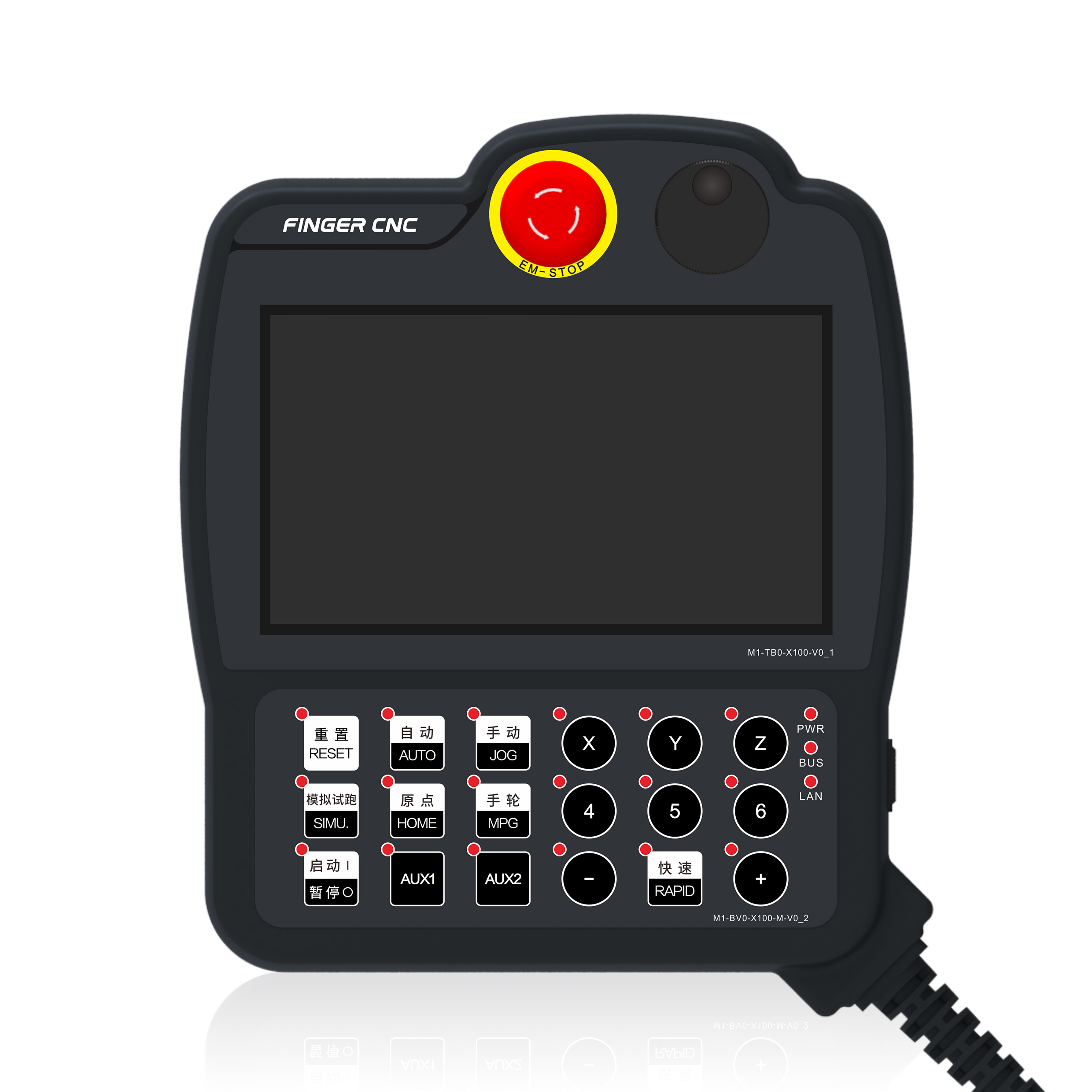
3.Uses a 7-inch touch screen, among other devices, to display the CNC system's operation interface, machining programs, processing parameters, machine tool status, alarm information, etc., facilitating monitoring and operation by the operator.
4.Equipped with communication functions to interact with external devices, such as data transmission to an upper-level computer (e.g., a PC) for remote monitoring, program transfer, and system upgrades; or network communication with other CNC devices to enable collaborative work and centralized management of multiple devices.
5.1. Uses high-resolution color display for clearer visuals
6.Supports ultra-long power-off retention, ensuring more reliable real-time data recording
7.Utilizes a high-performance CPU as the core computational component of the CNC system, responsible for processing and executing various CNC instructions, programs, and data calculations. The high-performance CPU can quickly respond to and process large amounts of instruction information, ensuring system real-time performance and efficiency
8.Uses USB 3.0 ports for fast and convenient program transfer and import

Software Overview
1.RT-Linux embedded control system platform
2.Full compilation execution module
3.Configuration-based IoT development platform
4.Remote fault diagnosis and upgrade assistance
5.Platform-based design concept
6.64-bit high-speed, high-precision contour control
7.Dialog-based auxiliary program editing
8.Special curve processing: Supports constant-speed processing of parabolic and spline curves, improving surface finish; spline curve teaching function, automatically fitting the curve between points using cubic equations, providing smoother curves compared to traditional teaching functions
9.1. Supports one-to-one gantry, vertical multi-joint robotic arms, SACRA robotic arms.
10.2. Supports non-standard trays and customized tray modules.
11.3. Torque detection and protection function: Real-time torque protection function to safeguard the robotic arm and machine tool; performs torque detection during product pickup and placement to protect the machine's gripper from being squeezed; provides protection during collisions in the machining process to avoid damage.
12.5. Built-in standard instruction set dialog programming module, easy to operate, with program positions linked to points, and one-click adjustment of positions.
Product Features
1. Easy teach-point programming
2. Fast execution speed
3. Compatible with various trays
4. Supports simulation trial run and handwheel prediction function
5. Supports customized tray handling methods
6. Customizable safety zones
7. Customizable IO names
Application Cases
Vertical Multi-joint Robotic Arm
Gantry Robot
SACRA Robotic Arm
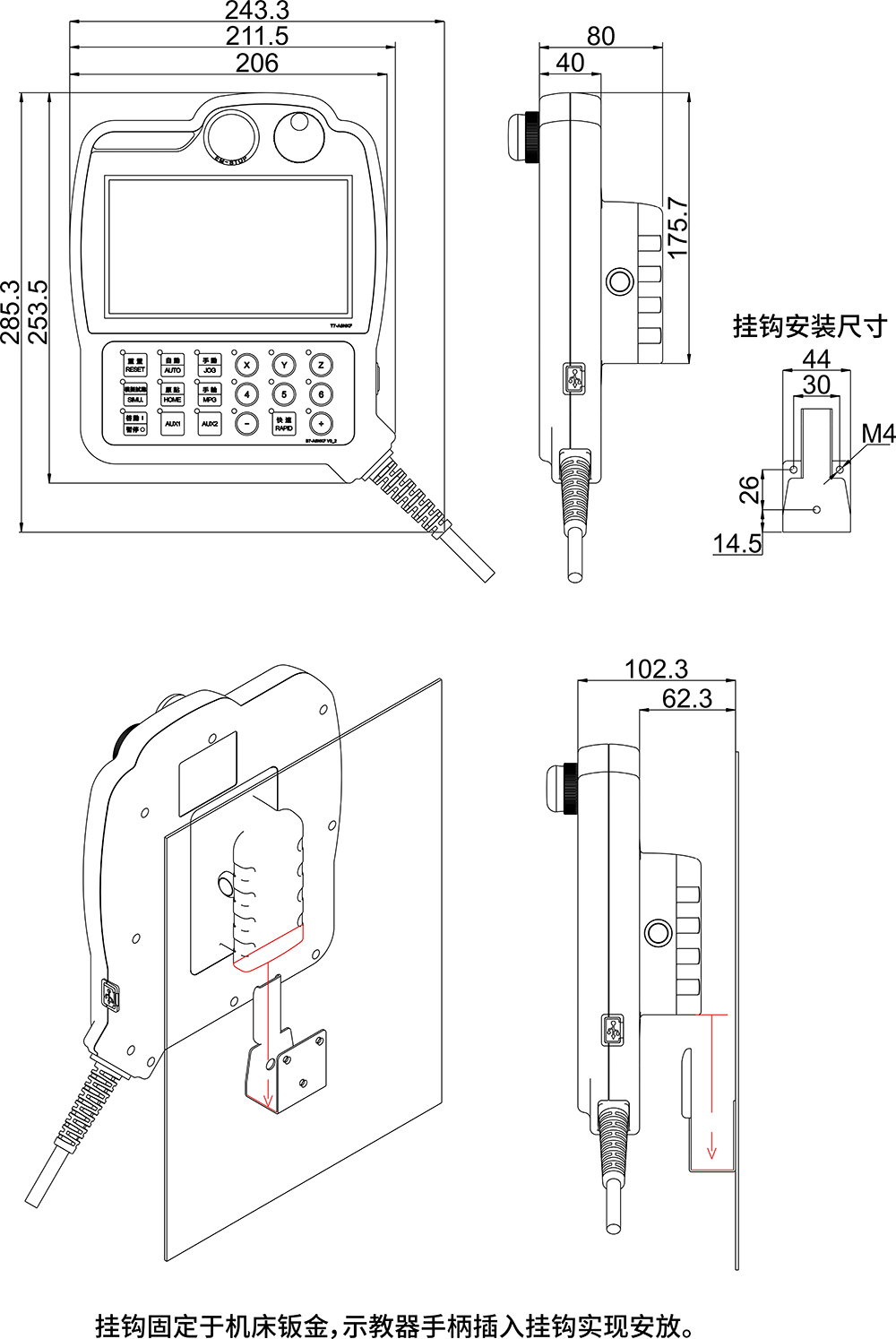
Dimensions
Hot Tags: Multi-axis Robotic Arm Controller TP-X1-B-N-A1, China Multi-axis Robotic Arm Controller TP-X1-B-N-A1 manufacturers, suppliers
Previous
No InformationYou Might Also Like


Send Inquiry