

In the realm of modern manufacturing, milling machines play a pivotal role in shaping various materials with precision. At the heart of these machines lies the milling machine controller, a crucial component that dictates the machine's movements and operations. As a trusted supplier of milling machine controllers, I am excited to delve into the software that powers these controllers, exploring the different types, features, and their significance in the manufacturing process.
Understanding the Role of Software in Milling Machine Controllers
Milling machine controllers rely on software to translate design specifications into precise mechanical movements. The software acts as the brain of the controller, processing instructions and coordinating the actions of the machine's axes, spindle, and other components. It enables operators to program complex machining operations, control feed rates, and monitor the machine's performance in real-time.
Types of Software Used in Milling Machine Controllers
1. G-Code Interpreters
G-Code is a standard programming language used in computer numerical control (CNC) machines, including milling machines. G-Code interpreters are software programs that read and translate G-Code instructions into machine-readable commands. These interpreters are essential for communicating design specifications from CAD/CAM software to the milling machine controller. They ensure that the machine executes the programmed operations accurately, from simple linear movements to complex 3D machining.

2. CAD/CAM Software
Computer-aided design (CAD) and computer-aided manufacturing (CAM) software are integral to the milling process. CAD software allows designers to create detailed 2D or 3D models of the part to be machined. CAM software then takes these models and generates the necessary G-Code instructions for the milling machine. This software provides advanced features such as toolpath generation, simulation, and optimization, enabling operators to plan and visualize the machining process before actual production.
3. Machine Monitoring and Control Software
Machine monitoring and control software provides real-time visibility into the milling machine's performance. It allows operators to monitor key parameters such as spindle speed, feed rate, and tool wear, and make adjustments as needed. This software also enables remote monitoring and control, allowing operators to manage multiple machines from a central location. Some advanced machine monitoring and control software also includes predictive maintenance features, which can help prevent machine breakdowns and reduce downtime.
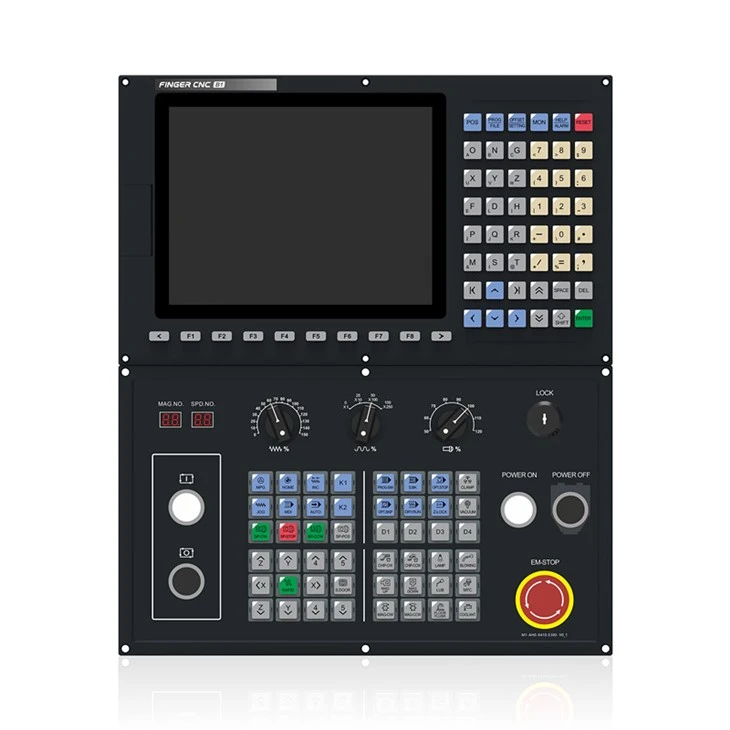
4. User Interface (UI) Software
The user interface software is the interface between the operator and the milling machine controller. It provides a graphical representation of the machine's status and allows operators to input commands and settings. A well-designed UI software should be intuitive and easy to use, enabling operators to quickly and accurately program and control the machine. Some UI software also includes features such as touchscreen support, multi-language support, and customizable layouts.
Features and Benefits of Software for Milling Machine Controllers
1. Precision and Accuracy
The software used in milling machine controllers enables high levels of precision and accuracy in machining operations. By translating design specifications into precise machine movements, the software ensures that the final product meets the required tolerances. This is particularly important in industries such as aerospace, automotive, and medical, where precision is critical.
2. Efficiency and Productivity
Advanced software features such as toolpath optimization and simulation help to improve the efficiency and productivity of the milling process. Toolpath optimization algorithms can reduce machining time by minimizing the distance traveled by the cutting tool, while simulation allows operators to identify and correct potential issues before actual production. This results in faster production times, reduced scrap rates, and increased overall productivity.
3. Flexibility and Versatility
Modern milling machine controller software offers a high degree of flexibility and versatility. It allows operators to easily switch between different machining operations, such as milling, drilling, and tapping, and to program complex geometries and contours. This flexibility makes milling machines suitable for a wide range of applications, from small batch production to large-scale manufacturing.
4. Ease of Use
The user-friendly interfaces of milling machine controller software make it easy for operators to learn and use. Even operators with limited programming experience can quickly become proficient in using the software to program and control the machine. This reduces the training time and costs associated with operating milling machines.
Our Milling Machine Controllers and Software Solutions
As a leading supplier of milling machine controllers, we offer a range of high-quality products and software solutions to meet the diverse needs of our customers. Our Mill Controller is a powerful and reliable controller that provides precise control over the milling process. It is compatible with a wide range of G-Code interpreters and CAD/CAM software, allowing for seamless integration with existing manufacturing systems.
Our Multi-channel Milling Machine Controller is designed for high-volume production environments. It features multiple channels that can control multiple axes simultaneously, enabling faster and more efficient machining operations. The controller is also equipped with advanced machine monitoring and control software, which provides real-time visibility into the machine's performance and allows for remote monitoring and control.
For customers looking for a cost-effective solution, our Cost-effective Mill Machine Controller offers excellent value for money. It provides all the essential features and functionality required for basic milling operations, without compromising on quality or performance.
Conclusion
The software used in milling machine controllers plays a crucial role in the modern manufacturing process. It enables high levels of precision, efficiency, and flexibility, making milling machines suitable for a wide range of applications. As a supplier of milling machine controllers, we are committed to providing our customers with the latest software solutions and technologies to help them stay competitive in the market.
If you are interested in learning more about our milling machine controllers and software solutions, or if you have any questions or requirements, please feel free to contact us. Our team of experts will be happy to assist you and provide you with the information you need. We look forward to working with you to meet your manufacturing needs.
References
- "CNC Machining Handbook" by Peter Smid
- "CAD/CAM Software for CNC Machining" by John Doe
- "Milling Machine Operations" by Jane Smith


